Liberia Flag: Waving Fabric Texture for Dynamic Designs
In the world of digital design, static images often struggle to capture the energy and authenticity of the real world. Flat graphics can feel sterile, especially when you are trying to convey movement, pride, or historical significance. This is where high-quality design assets, such as the Liberia Flag with a waving fabric texture, become indispensable tools for professionals. We are not just looking at a standard vector graphic here; we are discussing a realistic flag rendering with highly detailed fabric texture, simulating a beautiful flag blowing in the wind. For designers, marketers, and content creators, this specific type of asset bridges the gap between digital abstraction and physical reality.
The Power of Realistic Textures in Modern Design
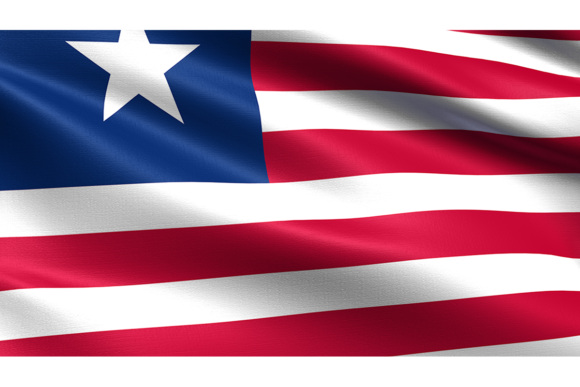
The visual style of this asset is defined by its commitment to realism. Unlike flat, single-color representations, this high-resolution flag captures the subtle undulations of cloth, the way light interacts with the folds, and the authentic weave of the material. It possesses a tactile quality that draws the viewer in. When you look at this image, you can almost feel the weight of the fabric and the breeze moving through it. This level of detail adds a layer of sophistication to any project, transforming a simple graphic into a piece of visual storytelling.
For a brand identity or a presentation, using a texture like this signals attention to detail. It suggests that the creator cares about the quality of the visual experience. The Liberia Flag itself carries deep symbolic meaning—the lone star representing freedom and the red and white stripes echoing the American influence in its founding. When rendered with such a high-fidelity texture, those symbols resonate more powerfully. It moves beyond being a mere icon and becomes a representation of national character and movement.
Practical Applications: From Print to Motion Graphics
One of the strongest arguments for incorporating this specific asset into your library is its sheer versatility. Because the resolution is a massive 3840×2160px, the image is future-proofed for almost any application. You do not need to worry about pixelation when scaling up for large-format printing. Whether you are designing a backdrop for a conference stage, a banner for a community event, or high-end editorial packaging, the clarity remains intact.
Digital and Motion Use Cases
In the realm of web design and social media graphics, movement is king. A static flag can sometimes blend into a busy background, but a flag blowing in the wind creates a focal point. It introduces a sense of dynamism to a website hero section or a YouTube thumbnail. For motion graphics, this texture is particularly valuable. It can be used as a overlay in video editing software to create realistic background plates or integrated into kinetic typography to add depth to a patriotic or historical narrative.
Print and Corporate Applications
For print documents, the realistic texture adds a premium feel to reports, brochures, and invitations. Imagine a corporate annual report for a company with ties to Liberia; using this waving texture immediately elevates the document from a standard business report to a polished, professional presentation. Entrepreneurs and small business owners can use this for packaging design to denote origin or quality, especially for products exported from the region. The high contrast and detailed shadows ensure that the image pops even on matte paper stocks.
Strategic Integration for Brand Consistency
When building a brand identity, consistency is crucial. However, consistency does not mean boring repetition; it means maintaining a specific level of quality and style. The Liberia Flag waving texture fits perfectly into a modern, sophisticated visual language. It works well alongside sans serif fonts for a clean, contemporary look, or paired with serif fonts for a more traditional, authoritative vibe. The key is that the texture itself is neutral enough to adapt to different styles while remaining strikingly realistic.
Marketers often struggle to find imagery that feels genuine rather than stock-like. This asset solves that problem. Because the fabric texture is so detailed—the creases and shadows are organic—it feels like a photograph taken in the moment rather than a computer-generated mockup. This authenticity is vital for social media, where audiences are quick to dismiss generic or artificial-looking content. Using this image in your background can increase engagement by providing a rich, immersive visual environment that supports your text or video content.
Evaluating Fit and Best Practices
Before integrating any asset, you should evaluate how it fits with your existing design assets. While this flag is a standalone hero image, it needs to be handled with care to maintain visual hierarchy. If you place this detailed texture behind a lot of text, ensure there is enough contrast or use a semi-transparent overlay so the text remains legible. The richness of the texture is its strength, but it can compete with typography if not managed correctly.
Consider the file format—.jpg—which is optimized for photographic content. It balances quality with file size, making it suitable for web loading speeds while retaining the necessary detail for print. When using this for logo design elements or branding marks, ensure that the resolution is sufficient for your final output size. Given the 4K dimensions, you have significant flexibility here. Ultimately, this asset is a practical tool for anyone looking to add depth, realism, and a sense of motion to their creative projects, serving the needs of hobbyists and professionals alike.